
Virtual Event
- This event has passed.
Assisted Living/RCF Virtual Conference
February 10 @ 9:00 am - February 11 @ 4:00 pm
Virtual Event
$189.00
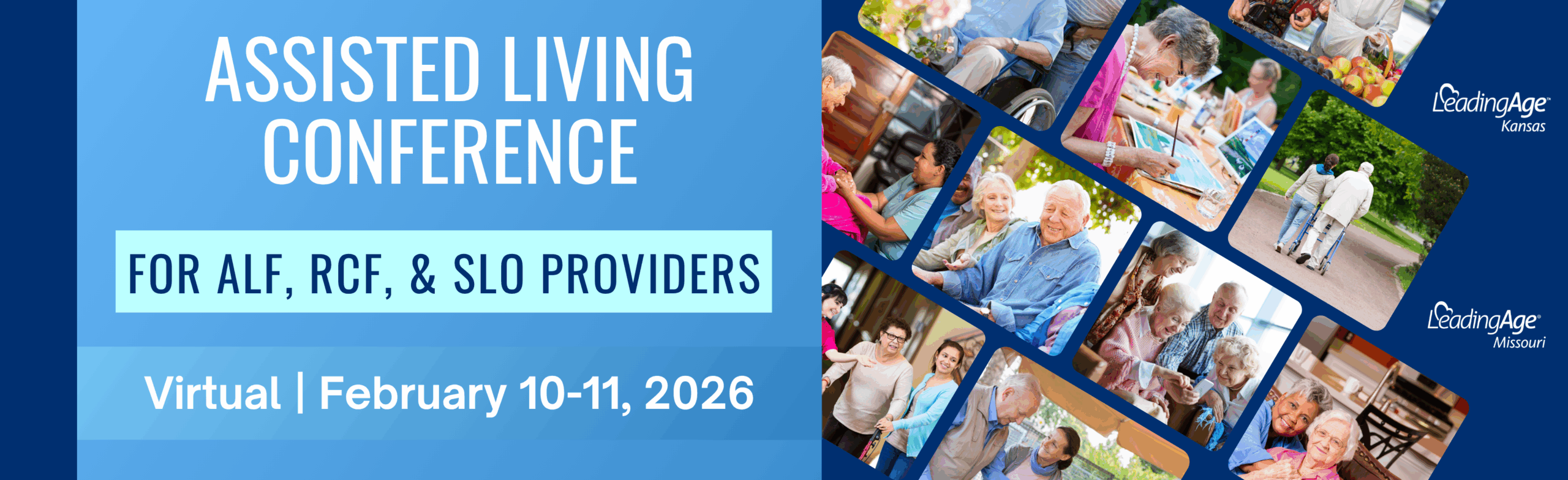
Join us for a 2-day virtual conference deep diving into issues important to Assisted Living and Residential Care Providers.
Registration: $189 / attendee. This rate applies to members and non-members.
Intended Audience: This conference was organized specifically for leaders and staff in assisted living, residential care, and/or state licensed only facilities.
Approved for 5 ADM and 5 PC CEU’s for MO LNHA/RCAL Administrators (TA# 015-47-26)
Session Schedule
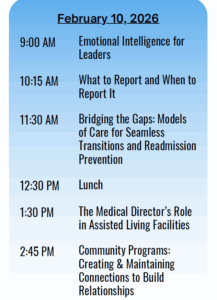
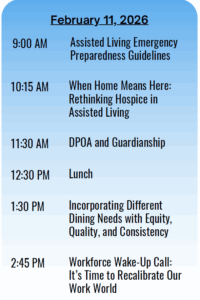
All Times in CST. Sessions are 60 minutes with 15-minute breaks between.
Session Details
Day 1
Session 1
Leading With Emotional Intelligence: Shifting from Doing to Developing Others in Long-Term Care
Karen Sturchio, Regional Director of Operations, Oxford Senior Living
In the demanding world of long-term care, leaders often rise through the ranks by being exceptional doers—people who step in, take charge, and get things done. Yet, sustaining success at the administrative level requires a different skill set: one rooted in emotional intelligence, self-awareness, and the ability to empower others.
This session explores how emotionally intelligent leadership transforms “doing” into “developing.” Through practical examples and self-reflective activities, participants will learn how to strengthen self-awareness, delegate effectively, and coach their teams to higher levels of engagement and accountability—all while fostering a culture of empathy and trust.
- Identify key components of emotional intelligence (EI) that impact leadership effectiveness in the long-term care environment.
- Recognize personal tendencies that may hinder effective delegation and coaching, and apply strategies to shift from task-oriented to people-oriented leadership.
- Demonstrate emotionally intelligent communication techniques to build trust, motivate staff, and cultivate a supportive, high-performing team culture.
Session 2
What to Report and When to Report It
Dawne Altis, Director of Survey, Certification, and Credentialing, Kansas Department of Aging and Disability Services
During this session, attendees will explore the reporting the requirements used in the State Operations Manual regarding reportable incidents.
- Identify reportable incidents and issues.
- Understand the regulatory requirements regarding Facility Reported Incidents (FRI).
- Required information and facility responsibilities in the reporting process.
Session 3
Bridging the Gaps: Models of Care for Seamless Transitions and Readmission Prevention
Lee Wilford, Chief Operating Officer, Puzzle Healthcare
Care transitions remain one of the most vulnerable points for older adults, particularly when moving from the hospital to assisted or independent living (AL/IL) or through hospital → SNF → AL/IL pathways. Fragmented systems, competing stakeholder priorities, and lack of continuity increase the risk of hospital readmissions. This session explores how models of care can reduce fragmentation, strengthen coordination, and prevent avoidable readmissions during these transitions. Drawing from evidence and best practices, participants will learn how providers and operators can align care strategies to reduce hospital utilization while supporting patient needs and system sustainability.
- Define the role of models of care in preventing hospital readmissions across transitions from hospital to AL/IL or SNF to AL/IL.
- Examine the impact of fragmented transitions on readmission rates and identify key risk factors.
- Identify systemic and stakeholder-driven barriers to readmission prevention, including regulatory, financial, and organizational challenges.
- Apply strategies for leveraging care teams, communication pathways, and operational protocols to reduce hospital utilization.
- Explore innovative approaches to partnership between hospitals, SNFs, and AL/IL communities that improve outcomes and reduce readmission risk.
Session 4
The Medical Director’s Role in Assisted Living Facilities
Dr. Walter Lin, MD, MBA, Generation Clinical Partners
As resident acuity increases and expectations for aging in place continue to rise, assisted living communities are under growing pressure to deliver high-quality, clinically informed care while preserving their social and residential essence. This presentation examines how an engaged Medical Director can elevate clinical outcomes, enhance resident and family satisfaction, and strengthen organizational performance. Participants will learn to define the Medical Director’s essential responsibilities, implement practical strategies that drive measurable improvements in care, and position their communities for success amid a rapidly evolving assisted living landscape. Whether you’re an administrator, nurse, or physician leader, this session offers actionable insights to help your organization thrive in the new era of assisted living.
- Explain the value of establishing an assisted living Medical Director position in the context of increasing resident acuity and the universal goal of aging in place.
- Identify core responsibilities of the Medical Director in promoting quality, safety, and clinical excellence in assisted living communities.
- Describe specific strategies the assisted living Medical Director can use to improve resident safety and outcomes.
- Evaluate future challenges and opportunities for physician leadership in the evolving assisted living landscape.
Session 5
Community Programs: Creating & Maintaining Connections to Build Relationships
Michelle Haub, Special Programs Leader, Meadowlark Hills Retirement Community
Creating and maintaining community programs can be your gateway to improving quality of life for people living in your facility and in the greater community. Learn how to utilize your staff’s knowledge, skills and team strengths to develop the right connections for now and the future.
- Identify the benefits of comprehensive community programs in enhancing quality of life for residents and individuals in the greater community.
- Describe the unique roles that nurses, administrators, and therapists play in initiating, developing, and sustaining community partnerships.
- Develop strategies to create sustainable connections with local organizations, volunteers, and support networks that align with residents’ & community needs and facility goals.
- Identify methods for measuring the impact of community programs on resident well-being, staff satisfaction, and community relationships.
Day 2
Session 1
Assisted Living Emergency Preparedness Guidelines
Speaker TBD
Session Description TBD
Session Objectives TBD
Session 2
When Home Means Here: Rethinking Hospice in Assisted Living
Amy Hensley, MSN, RN, Co-Founder, Before the Casket
Death happens here. This session reframes leadership in assisted living: administrators will explore how to build stronger partnerships with hospice providers and retain your biggest assets: staff. Staff members—no matter their age or experience—often receive little more than a directive to move on to the next task. Acknowledging staff grief creates a culture of emotional support, and fosters resilience so your teams can provide extraordinary care, even in the hardest moments.
- Create strategies to strengthen collaboration with hospice agencies to support resident-centered care.
- Describe the various emotional impacts that resident deaths can have on assisted living staff.
- Design practices to support staff grief when residents die in assisted living settings to foster resilience, reduce burnout, increase retention, and strengthen team cohesion.
Session 3
Who’s the Boss? Understanding Powers of Attorney, Guardianships, and Conservatorships
Jennifer Walters, Partner & Managing Attorney, Clinkscales Elder Law Practice, P.A.
A resident may have Powers of Attorney, Guardianship and/or Conservatorship documents that give authority to someone. It can be difficult to understand what each of these documents does and what authority they grant. The purpose of this presentation is to explain legal background of each document and what authority each conveys. I will include real life scenarios and how I have approached them.
- Learn why guardianships and conservatorships are put in place.
- Learn what authority Powers of Attorney, Guardianship and Conservatorships convey.
- Understand how approach them when provided them in real life scenarios.
Session 4
Incorporating Different Dining Needs with Equity, Quality, and Consistency
Rebecca McCullough, MS, RDN, LD, CDP, FAND, NEXDINE Hospitality
This training is designed to equip dining and hospitality teams in assisted living with the tools and knowledge to deliver exceptional dining experiences that honor resident preferences, health needs, and cultural backgrounds. Participants will explore strategies for balancing individualized care with operational consistency, ensuring that every resident receives equitable access to high-quality meals regardless of dietary restrictions, medical conditions, or personal choices.
- Resident Centered Assessment & Documentation
- Individualized Menu Modification
- Operational Consistency with Choice
- Continuous Quality & Equity Monitoring
Session 5
Workforce Wake-Up Call: It’s Time to Recalibrate Our Work World
Cara Silletto, MBA, CSP, President & Chief Retention Officer, Magnet Culture
Finding and keeping lasting talent today is harder than ever because the employer-employee relationship has evolved. Staffing challenges – and their financial impact – are here to stay, and managers can no longer “do more with less” and still meet organizational goals and customer expectations. This new dynamic means serious changes are needed for organizations that want to keep their doors open. While many industries have normalized business practices that are no longer effective for managing today’s new workforce, executives hold the power to recalibrate to a more sustainable approach. Join us to uncover how to align your leadership team’s priorities, operationalize unavoidable turnover, and turn your culture from a vulnerability into a competitive advantage.
- Explore the unique perspective of today’s new hires to avoid the growing disconnect between senior leaders and staff
- Reconsider existing organizational priorities, budgets, and workloads to create greater sustainability
- Equip leaders to become culture-building strategic partners with executive backing to accelerate results
A recording of this event is not included in the registration fee.